SUSTAINABILITY CASE STUDIES
-
 Enhancing Safety At Wellington Foods
Advanced inspection technology enables manufacturers to detect a broader range of contaminants. See how integrating it at the end of production lines strengthens compliance and simplifies operation.
-
 Maximum Quality Control
Precision inspection and compliance-driven processes are essential for manufacturing to help safeguard product quality, support regulatory requirements, and protect patient safety at scale.
-
 X-Ray Inspection For Supplement Safety
Wellington Foods ensures dietary supplement safety using METTLER TOLEDO’s X37 X-ray system, which detects contaminants, and meets regulatory standards with high-speed, precise inspection technology.
-
 Fiasco Gelato Takes Food Safety To The Next Level
Learn how Fiasco Gelato ensures contaminant-free products with an inspection system, enhancing food safety and supporting their expansion goals.
-
 Implementation Of An X-Ray Inspection System For Mixed Nut Products
Learn about an inspection system that addressed the key concern of an Italian nut supplier of ensuring no foreign contaminants were present in the packaged nuts reaching the customers.
-
 Earth Animal Keeps Out Foreign Body Contamination
Learn the details behind an X-ray inspection system enabling a pet food provider to effectively inspect their products to identify and remove any that contain foreign objects.




SUSTAINABILITY WHITE PAPERS & ARTICLES
-
 6 Strategies To Improve Consistency, Cut Costs, And Elevate Your Food Products
Inconsistent textures and clumped powders waste raw materials. Matching mixer designs to ingredient behaviors standardizes batches, protects delicate formulas, and automates control to lower costs.
-
 Explosion Protection For Product Inspection Equipment
Discover how understanding hazardous area classifications and compliance requirements can help manufacturers reduce ignition risks, select appropriate equipment, and operate more safely.
-
 Validation, Verification, And Monitoring Of Product Inspection Equipment
Take a look at how food manufacturers can maintain control of inspection systems through structured testing, documentation, and monitoring practices that support compliance.
-
 HACCP Versus HARPC: What's The Difference?
This white paper takes a thorough look at HACCP and HARPC and details their similarities and differences. It also explains key steps food companies must take to transition from HACCP to HARPC.
-
 Mixing Technologies For The Production Of Low To High Viscosity Adhesives
Understand how high shear and planetary mixing technologies optimize adhesive production. Learn to reduce cycle times, eliminate defects, and balance efficiency with your specific viscosity needs.
-
 Food Safety Digital Maturity In The Supply Chain
Look at how connected data and automated processes strengthen safety, improve traceability, and streamline compliance across the supply chain—offering a clear roadmap for progression.




SUSTAINABILITY PRODUCTS
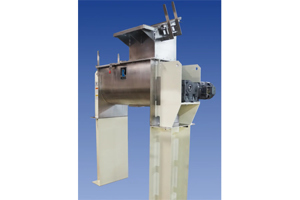
ROSS Ribbon Blenders efficiently mix powders, granules, and bulk solids across industries, offering customizable lab-to-production models for various bulk densities, including heavy-duty and sanitary applications.

Improve efficiency and profitability with a checkweigher designed for better accuracy and faster speeds. The Thermo Scientific™ Global Versa GP Checkweigher is a versatile, general purpose checkweigher that scans at line speeds up to 350 packages per minute without ever sacrificing accuracy, and now it features more than 10 engineering and functionality improvements to reduce maintenance and cost of ownership. The Versa GP Checkweigher comes with a compact cantilever construction for height adjustment and is ideal for packages up to 3 kilograms (6.6 pounds).

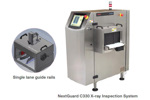
The design of the X3725 ensures consistent product presentation thanks to an integrated conveyor and product specific guiderails, ensuring maximum detection of contaminants.
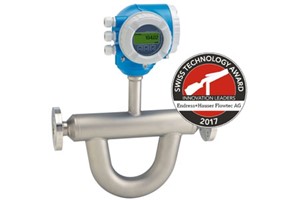
Promass Q 300 provides the highest measurement accuracy for mass flow, volume flow and density. Being the preferred choice for custody transfer applications, it has also been optimized for liquid applications where entrained gas is known to be present. The compact transmitter offers high flexibility in terms of operation and system integration: access from one side, remote display and improved connectivity options. Heartbeat Technology ensures compliance and process safety at all times.
There are over 4,500 compounds currently classified as PFAS compounds. BioLargo's PFAS treatment is customized to the water to reduce energy, breakthrough, waste products, and operation and maintenance costs.
SUSTAINABILITY NEWS
-
IRRI Explores Research Collaboration With FMC To Strengthen Rice Production In Africa10/20/2026
The International Rice Research Institute (IRRI) participated in FMC Agro Italia’s Rice Portfolio: Cultivating Opportunity meeting, held in Milan, Vercelli, and Novara, Italy, last 15–16 September 2026.
- OSU Field Research Targets Key Challenges For Organic Vegetable Growers
- Researchers Study How AI Could Improve Weed Management
- From The Ground Up
- BASF Announces EPA Approval Of Ridivex Herbicide, A New All-In-One Standard For Post-Emerge Weed Control In Corn
- Hapman To Unveil New Conveying Solution At PACK EXPO 2026
SUSTAINABILITY MULTIMEDIA
-

Explore inspection technologies designed to support product quality, regulatory compliance, and production efficiency, with solutions for contaminant detection, connected data management, and more.
-

Dynamic checkweighing helps food producers verify every product’s weight in motion, catch filling errors early, reduce rework, and support net weight compliance without interrupting production.