
Produce Processing Improves With Automated Systems
By Isaac Fletcher, contributing writer, Food Online
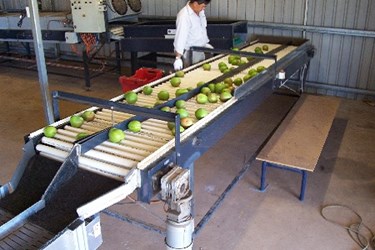
As technology improves, fruit and vegetable processors are postured to reap the rewards of automation thanks to increased efficiency, improved safety, and the ability to better meet consumer demands
When packaging fresh fruits and vegetables, producers are presented with numerous challenges regarding handling, food safety, and shelf life. In order to overcome these hurdles, produce companies are constantly on the lookout for ways to improve production processes. The most important elements in creating an effective process are: Handling — to maintain freshness and avoid damage, speed — to meet consumer demand and avoid spoilage, and variation in pack sizes — to accommodate all types of households.
Not only do manufacturers need to account for the aforementioned factors, they must do so while ensuring a high level of operational efficiency and complying with strict food-safety regulations and standards. These challenges provide opportunities for innovations and developments in produce packaging automation, as manufacturers adopt new technology to improve performance.
Case Study: Check out how this farm grew more efficient with automation
Maintaining high-product quality can be achieved by selecting the correct distribution technology to gently move products down the packaging line. Innovations in horizontal-motion distribution have enabled the transport of dry, fresh produce while removing the damage risks associated with human contact. It is important to achieve gentle handling without sacrificing speed, and improvements in automated conveyors help manufacturers produce high-quality goods quickly and efficiently.
Producers can also benefit from automation in bagging and sealing. As bagged fresh produce continues to be a popular packaging format for consumers, producers are in a position to take advantage of cost-effective fill and seal automation. By using this type of automated process, waste is reduced thanks to optimized product transfer. Additionally, great strides have been made in bagging speeds, with some machines capable of producing 150 bags per minute, compared to the traditional average of 70 to 80 bags per minute.
White Paper: Payback Calculations Of Automated Packaging
Technological advancements also allow manufacturers to store pre-programmed settings and/or make real-time changes to a production process electronically rather than having to manually configure machinery to fit a given task. Not only can processes be easily adapted to the job at hand, the technology also detects and flags errors or breakdowns immediately, allowing operators to minimize downtime.
Automated processes can also help food processors improve food safety through improved traceability and detection systems. Metal detection technology, which is sensitive and reliable, detects risks early and removes them without spoiling numerous batches, keeping the produce safe and costs low.