|
|
|
|
In a manufacturing environment defined by supply chain volatility and high turnover, industrial mixing remains a critical but often overlooked pillar of operational efficiency. Optimizing this process directly impacts energy consumption, product quality, and long-term costs. Refine your production with these five core strategies.
|
|
|
|
|
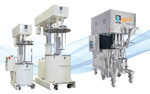
Selecting laboratory mixing equipment requires balancing immediate R&D needs with long-term scalability. While simple stirrers serve specific tasks, multi-shaft mixers offer a wide range of capabilities. Consider how these mechanical features can be cost-effective for both benchtop use and full-scale production.
|
|
|
|
|
The production of cannabis-infused oils, lotions, balms, beverages, powders, tablets, and tinctures requires specialized mixing equipment. Mixing directly affects dosage, bioavailability, appearance, texture, and stability, making it a crucial step in the manufacturing process. Explore mixers that are now available to meet your manufacturing needs.
|
|
|
|
|
A few years ago, the process of selecting a mixer for most applications was straightforward. The selection process is more complex today, because the capabilities of the most widely used mixers, especially heavy-duty mixers, have expanded steadily during the last decade. The distinction between mixers is much more understated.
|
|
|
|
|
|
|
Optimize complex batching with multi-shaft mixing technology. Achieve rapid powder dispersion, uniform heating, and automated discharge for high-viscosity pastes and gels.
|
|
|
|
|
Refine your R&D workflow by mastering high-viscosity material processing. Learn how planetary agitation and integrated safety features ensure consistent results and a seamless transition to production.
|
|
|