 Bakers Are Benefitting From Sanitary Equipment Design
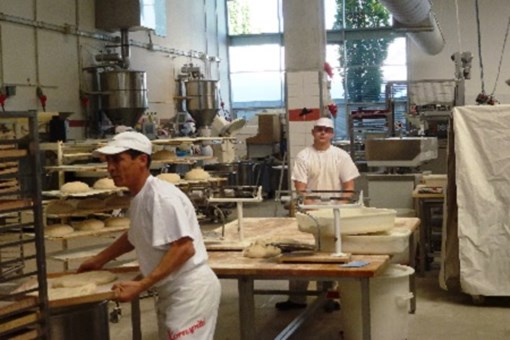
Throughout the food manufacturing industry, food safety is a top priority, and in order to enhance safety in their operations, baking companies are exploring sanitary equipment design solutions borrowed from the meat and poultry sectors.


FOOD SAFETY AND INSPECTION CASE STUDIES
-
Clean-In-Place (CIP) Recovery With Efficient Filtration9/26/2023
With the goal of lowering CIP process costs, a dairy producer and processor collaborated with Pall to implement a microfiltration solution, ultimately reducing operating costs and environmental footprint.
-
Hillshire Brands Uses Manufacturing Intelligence5/1/2023
Explore solutions utilized by the Jimmy Dean brand, part of the Hillshire Brands portfolio, to address weight variance in one-pound sausage rolls that was driving up product giveaway and lost revenue.
-
Increase Production Capacity With Virtualized Process Automation3/16/2023
Learn how Sleeman Breweries grew their production, improved process control, and avoided the high expense of building a new greenfield facility.
-
Full Sail Brewing Taps Manufacturing Intelligence To Enhance Process3/16/2023
Learn how a new filtration process helped Full Sail Brewing Company use water more efficiently while creating less waste and helping preserve a unique employee culture.
-
Solution Helps Chocolate Manufacturer Build A Streamlined Factory1/10/2021
Chocolates Valor S.A. produces high-quality chocolate bars, chocolates and snacks. The company invested in digitalization solutions for the production environment, in particular through Preactor APS, which is a family of products for production planning and programming that improves the synchronization of manufacturing processes and offers greater visibility and control. It showed an immediate return on investment.
-
Brand Spirits Leader Digitizes Business Operations With The SIMATIC IT Suite1/7/2021
Gruppo Campari closed 26 acquisitions in the spirits industry in the past two decades to become the world’s sixth player, with over 50 premium and super-premium brands. With each acquisition, Gruppo Campari needs to integrate new products, plants and assets into its operations management systems. By 2012 they realized there was no standard workflow for document authoring and validation, and information was shared via email or phone. Using Siemens technology, Gruppo Campari has created a unified repository for all product specifications and increased the efficiency of product development and manufacturing processes.
FOOD SAFETY AND INSPECTION ARTICLES
-
Addressing A Lack Of Transparency In Green Claims8/3/2023
The rise in consumer awareness and demand for greater transparency has led to changes in regulations worldwide. In response to greenwashing in the food sector, as well as other industries, regulatory authorities are stepping up efforts to hold organizations accountable for their green claims.
-
What Can Be Done To Prevent Fraudulent Supply Chains?4/5/2018
Food fraud is a big topic at the moment and there are multiple challenges within any supply chain, especially these days where supply chains are global, have multiple players and where profits can be huge. In this column, I will detail some of the major obstacles in the organic food supply chain and show some practical applications which can reduce fraud within it.
-
A FSMA Rundown: Where The Industry Currently Stands On Preventive Controls Rules12/28/2015
The FDA’s Food Safety Modernization Act is designed to standardize food safety within the U.S. and countries importing food to the U.S. Now that the Preventive Controls for Human Food (PCHF) rules have been finalized, compliance dates are just a couple of years away, and even some documentation is required in less than one year.
-
Food Safety Modernization Act and e-Pedigree With Intelleflex' Temperature Monitor11/1/2012
The Food Safety Modernization Act (signed by President Obama in January 2011), and the e-Pedigree law, set to take effect in January 2015 should drive demand for Intelleflex’ solutions, and asset tracking technologies in general
-
Product Inspection: Current Challenges And Future Outlook8/22/2012
In this Q&A, Mike Odom, general manager, product inspection business unit, Thermo Fisher Scientific, gives his insights into the challenges of product inspection, the advantages of inspection technology, the FDA recommendations for inspection, and how product inspection will evolve in the future.
-
Article: The Sanitary Instrumentation Primer4/16/2010In the pharmaceutical, food and beverage, and biotech industries, contamination-free processing is critical. The integrity of the sanitary manufacturing application is essential for full compliance to the validation process. The potential for contamination increases with the introduction of peripheral components, such as filtration and temperature and pressure measuring instrumentation required to ensure process parameters remain within acceptable limits. By Cole Parmer
FOOD SAFETY AND INSPECTION SUPPLIERS
|
|
|
|
|
|
|
|
|
|
|
|
|
|
|
|
 |
 |
 |
 |
 |
|
 |
|
|


FOOD SAFETY AND INSPECTION
Food Safety
Food safety is a scientific discipline that deals with making food safe for consumption. It is a process involving the handling, preparation, processing and storage of food that prevents contamination and any food borne illnesses.
There are two considerations to food safety. The first is the safety of the manufactured product to the market and the second is the safety of the product from market to consumer. Food safety covers the entire food chain from raw ingredients to consumer consumption.
Safety considerations in food manufacturing include food hygiene, food additives, identification and removal of contaminants, import, export and domestic regulatory requirements, labeling, and certification systems.
There are five key principles of food hygiene. The first is to prevent food contamination with pathogens from people, pets and pests. The second is to keep process and store raw and cooked foods separately.
The third is cooking temperatures. Food should be cooked for the correct length of time at the right temperature to kill pathogens. The fourth principle is food storage temperatures. Foods should be stored at the proper temperature. The fifth principle depends on the availability of safe water in which to cook food.
Food safety is taken very seriously and the CDC uses a variety of surveillance systems to constantly monitor the occurrence of food borne diseases. Any outbreaks of food borne illnesses are immediately and thoroughly investigated.
Most food manufacturers must have a food safety plan in place in order to meet regulatory requirements. These programs assess food risks and have actions in place to prevent and manage risks. All actions are documented giving peace of mind to the business owner by protecting the business and the brand.
Food safety programs also assist in reducing food waste and improving productivity.
FOOD SAFETY AND INSPECTION NEWS
-
FSMA Update - FDA Announces Grant Award To Establish Regional Centers For Food Safety Training, Outreach And Technical Assistance2/19/2016
FDA Announces Grant Award to Establish Regional Centers for Food Safety Training, Outreach and Technical Assistance
- Key Technology Introduces Sanitary Rotary Finish On Vibratory Conveyors
- Obtain Guidance On Metal Detection's Role In Food Safety
- JR Food Consultants Recommends Icicle HACCP Solution By Burton Software
- Loma Supplies IP69K Certified Inspection Equipment
- Seward Stomacher 400 Used To Ensure Poultry Is Safe For Consumption
- Plascon Group Acheives BRC Certification For Flexible Food Packaging
FOOD SAFETY & INSPECTION MULTIMEDIA
-

In this podcast, Rob Rogers, Senior Advisor of Food Safety and Regulation with Mettler-Toledo, discusses with Food Online Voices some recent, high-profile examples of foreign bodies causing food recalls. Further, Rogers mentions the most common types of foreign body contaminants causing food recalls and what food manufacturers can do to prevent them from entering the market. Additionally, Rogers addresses the long-term benefits food manufacturers, processors, and packagers will see from implementing foreign body detection systems and offers advice to companies seeking metal detection and X-Ray inspection systems. Finally, Rogers mentions FSMA, how it is impacting the food manufacturing industry, and how it is helping innovate the foreign body detection systems market.
-

The newest innovation in product inspection, Thermo Scientific's NextGuard X-ray Detection System

FEATURED PRODUCTS
-
The ULTRA-PACTOR® High Containment Roller Compactor is the most technologically advanced roller compactor for optimal protection from highly active and hazardous substances.
-

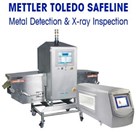
METTLER TOLEDO SAFELINE is the world leader in customized metal detection and x-ray inspection solutions for food, pharmaceutical, and nutraceutical industries.
-

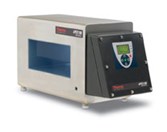
The Thermo Scientific APEX 100 metal detector provides cost-effective protection from common metal contaminants found in food production.