
PACKAGING CASE STUDIES
-
 Proving The Value Of Augmented Reality In Protein Packaging
Explore the study of a collaborative team approach to designing a pilot for a protein packaging line to incorporate and demonstrate the value of augmented reality.
-
 Inline Weighing Technology Offers Additional Quality Check Features
Alongside weight monitoring, the checkweigher used at Protina Pharmazeutische GmbH offers other important functions that support the company's system of strict quality management.
-
Case Study: A Breakthrough In Snack-Packing Efficiency: Red Mill Welcomes The Ishida FPS
By automating the packing of cases, using two Ishida Flexible Packing Systems (FPS), a major snack food company can now run an entire production and packing unit, from production and flavouring through to case-packed, palletised product, with a 60% reduction in labour costs.By Ishida Europe
-
Quaker Steak & Lube Ensures Food Quality And Safety With Avery Dennison's FreshMarx Automated Freshness Labeling Solution
Although the busy kitchen of Quaker Steak & Lube in Middleton, WI is always hopping with up to 12 employees preparing and labeling enough food to accommodate its weekly 5,000 to 6,000 guests, Proprietor, Scott Acker, never worries about the freshness of the food he serves. By Avery Dennison Printer Systems Division


PACKAGING WHITE PAPERS
-
 Ensuring Conformity Of Packaged Food
In this white paper, we define package conformity and why it's important to food industry stakeholders. Further, we explore the technologies available to meet conformity objectives and how using them can benefit your business.
-
 Calculating The Total Cost Of Ownership For In-Line Metal Detection Equipment
This white paper will help clarify the foundations of investment decisions, explain the costs dynamic in-line metal detection equipment, and help you calculate ROI of in-line metal detection equipment.
-
 Vision Inspection Systems: Designing Labels And Making Codes Readable
Inspection systems are highly accurate, and growing more accurate all the time, but they still have limitations which must be considered when implementing a label inspection program.
-
 OMAC And PackML: Industry Standards For OEE Improvement
The Organization for Machine Automation and Control (OMAC) was founded in 1994 and is made up of end-users, technology suppliers, and machine builders. OMAC members are recognized as industry leaders within the End Users and Equipment Manufacturers group. This White Paper examines how OMAC and Packaging Machine Language (PackML) are helping improve industry standards for overall equipment effectiveness (OEE).
-
 Preparing To Meet The Final Requirements Of FSMA
FSMA places the responsibility for food safety squarely on food producers. The dates by which those requirements will take effect have now been finalized and some have even passed. This paper recommends actions food processors should now take to meet the full requirements of FSMA.
-
 Checkweighing Challenges Call For Customization
Checkweighers are key to measuring efficiency and cost of a packaging line. However, there are factors that may require customization that play a role in the success of your checkweigher.






PACKAGING APPLICATION NOTES
-
 Ensure Quality Control With Innovative Software
Ensure unmatched product quality with an X-ray system paired with an innovative software that detects contaminants and missing items in stacked packaged goods with precision.
-
 What Blending Equipment Is Best For Bakeries?
Mixes for baked goods demand a high level of accuracy. This application note explains why The Ribbon Blender is a well-proven technology for cost-effective and accurate mixing of baking mixes.
-
 Recommended Blending Equipment For Guacamole
Commercially prepared guacamole requires fast mixing prior to packaging. This application note explains why ribbon blending is an ideal method for producing bulk quantities of fresh guacamole.
-
Tech Brief: Electronic Variable Speed Promotes Processing Flexibility In Ribbon Blenders - From Soft Start To Discharge
Over the years, many ribbon blenders were built without any provision for starting at slow speed. Unfortunately, a dead load start presents many disadvantages, all of which increase costs. The buyer must choose between using an over-sized drive train that is capable of delivering the peak horsepower needed to get the batch moving or a lower torque drive train that is appropriate for powering the blender once it is running but overloaded when starting. By Charles Ross and Son Company



PRODUCTS

Efficient, customizable, intuitive use
Advanced bottom inspection of a variety of packages. The system supports customized lighting and can be extended with top cameras for further applications such as seal contamination inspection.
Effective Bottom Inspection
Supporting up to 400 ppm, capture the nuances associated with various product shapes or sizes where a larger field of view is required.
Application Based Design
Cameras and advanced lighting options help overcome challenging applications where wet, reflective, or uneven surfaces interfere with imaging.
Intuitive Software
Powerful CIVCore software offers a range of inspection options for easy setup and configuration.
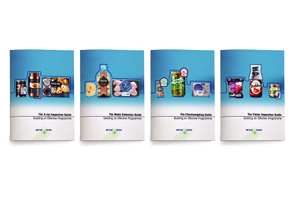
Re-designed to include new content and revised insights, our latest product inspection guides are designed to help readers develop comprehensive checkweighing, metal detection, vision and x-ray inspection programs.

Fast, Flexible Solutions
Mettler-Toledo Product Inspection offers support for food and pharmaceutical manufacturers as well as packaged consumer goods producers in scaling up production and adapting to meet variable or seasonal demand through our try before you buy program.
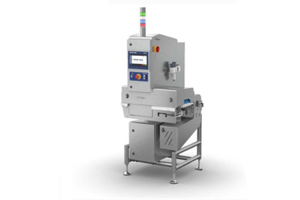
Compact, High-Speed and Precise
A unique solution which inspects individually wrapped food or pharmaceutical products at high line speeds. The X34C combines a short total footprint with an optimized focal distance to enhance detection of non-conforming products and reducing waste

Automated brewery software and solutions are designed to reduce the time spent managing equipment and processes so you can focus on the art of crafting beer.
Keep Pace with Market Demands - Increase Capacity and Operational Efficiency Without Adding Costs
As a brewer your main focus is to produce high-quality beer to meet customer demand. There are many competing pressures to running a profitable, productive brewery. Consistent quality, improving yield, and reducing production time and costs are just a few of those pressures. To build a better brewery, you need flexible processes and better insights into your processes.
We understand the brewing industry and the challenges you face every day. Our focus on beer production optimization addresses every phase of your operation. That focus helps you address cost, quality, and flexibility to meet demand, from grain handling through waste treatment and packaging.

A Modular, Scalable Linear Motor System to Increase Flexibility
Revolutionizing the design and build of track-based industrial motion control for packaging and material handling, iTRAK® combines linear and rotary motion. The result is a flexible, fully integrated motion solution that helps you get more from your machines.

X-ray inspection systems for packaged products offer maximum contamination detection sensitivity at high throughputs for a diverse range of food and pharmaceutical applications.

The XR75 Curtainless Up/Down Conveyor is ideal for lightweight packaged products and many unpackaged bulk applications.
NEWS
-
Be Part of Photonics Future: CIOE 2025 Visitor Registration Live Now!4/9/2025
The 26th China International Optoelectronic Exposition (CIOE 2025) is set to take place from September 10–12, 2025, at the Shenzhen World Exhibition & Convention Center, spanning 240,000 square meters of exhibition space.
-
New Technology Tracks Dairy Cows For Improved Health And Productivity1/30/2025
As dairy farmers dwindle every year, the demand for high-quality milk remains steadfast, driving a surge in dairy farming.
-
Puraffinity Signs First Commercial Agreement For Full-Scale Deployment Of Its PFAS Removal Technology6/2/2025
The agreement was signed with Envytech Solutions, the leading expert in mobile water treatment in the Nordic region and a member of the Sortera Group, which operates across the Nordics and the UK.
-
KBR Expands Support For Saudi's Energy Future1/22/2025
KBR announced today it has been awarded a contract to support sustainable production of energy resources in Saudi Arabia by contributing to the delivery of Saudi Aramco’s Master Expansion Program and increasing gas handling capacity at key regional locations.
-
Drawing Inspiration From Ancient Chemical Reactions3/20/2025
To help find solutions to the planet’s climate crisis, MIT Associate Professor Daniel Suess is looking to Earth’s ancient past.
ABOUT
Food Online Packaging
Food packaging is a big industry. Food packaging is used for many purposes including protection, tampering resistance, temperature control, chemical or biological needs. Packaging also includes the labeling of foods.
Barrier protection is a primary reason many foods must be packaged. Many foods cannot be exposed to oxygen or water vapor. The permeability of the packaging is a critical factor in package design. Some packages contain desiccants or oxygen absorbers that help extend the shelf life of certain food products.
Another function of packaging is to contain or agglomerate product. Many products consist of small items and these get packaged together in bottles, multi-packs or blister packs. This is primarily for efficiency, but certain powders and granular foods must have some form of containment such as a box, bag or jar.
Labeling provides a way for food manufacturers to transmit information about a product. Labels are important to be in compliance with regulatory requirements and they are important as a way to promote and market the brand.
Packaging also plays a vital role in terms of food security. Many packages offer tamper resistance to deter tapering or tamper evident features. These are special qualities that help indicate when tampering has occurred.
Many packages are designed specifically to deter pilferage with special authentication seals. Packages can also be designed to include anti-theft devices like RFID tags or electronic surveillance tags. These are designed for retail loss prevention.
Other uses of food packaging include convenience for retailers and consumers and can include features like stackability, and re-closable lids.