
Metal Detection
PRODUCTS
-

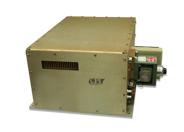
CPI EDB offers the 3469 magnetron transmitter system for use as a high-power source of RF power for outdoor-mounted radar applications. The transmitter cabinet contains the high voltage power supply, solid-state switch, and the high voltage tank assembly which includes the pulse transformer, energy storage high voltage capacitor, and filament power supply.
-

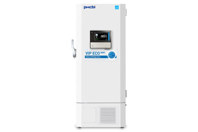
PHCbi brand's 18.6 cu.ft (528L) ultra-low temperature freezer offers the flexibility of operating on both 115V or 220V with the switch of a power cord. This model provides enhanced security features and operates at only 4.99kWh per day. SMART features include three lock methods: facial recognition, keypad, or optional proximity card. ENERGY STAR® Certified.
-

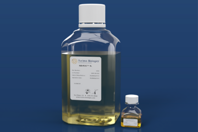
Speed your time to the clinic and create a more potent CAR T-cell therapy with NB-ROC, a xeno-free, serum-free T-cell culture media that can significantly boost transduction efficiency.
-

The IADA-2050CH is an integrated MMIC active doubler fabricated with GaAs Schottky diodes. This operates over a guaranteed 10 to 25 GHz input frequency range or a doubled output frequency range of 20 to 50 GHz.
-

At Mikart, our mission is to leverage our technical expertise in pharmaceutical development and manufacturing to deliver services that meet the diverse needs of our customers.


WHITE PAPERS AND CASE STUDIES
-
 Metropolitan Sewer District Of Greater Cincinnati
The Lower Mill Creek Partial Remedy (LMCPR) in Hamilton County, Ohio, is a large, complex effort to remove about 1.78 billion gallons of combined sewer overflows (CSOs) annually from the Mill Creek, an Ohio River tributary. When complete, LMCPR will improve water quality and serve as a catalyst to improve local neighborhoods.
-
 How Superior Fresh Is Pioneering Sustainable Aquaculture With Pinnacle Ozone Solutions
See how Superior Fresh uses advanced ozone technology to maintain pristine aquaculture water quality, supporting sustainable Atlantic salmon production and organic farming in a pioneering integrated system.
-
 Monitoring Laser Power In Laser-Based Fill & Finish Biopharmaceutical Systems
Custom laser power measurement ensures precise vaccine vial sealing, meeting strict biopharma compliance standards through tailored detectors, firmware, and calibration for critical fill-finish applications.
-
 Water Disinfection At Feldschlöesschen Brewery In Switzerland
Despite meeting European drinking water standards, contamination levels at a brewery reached as high as 800 CFU/ml, prompting the brewery to seek a reliable disinfection solution to protect the integrity of its production processes.
-
 Improving Patient Health And Safety: SOPs And Process Mapping
In this study, a biotech company faced compliance challenges due to inadequate SOPs that lacked detailed process maps. Propharma stepped in to provide a strategy and project plan.
-
 Actuators On Aeration Blower Valves Improve Dissolved Oxygen And Increase Overall Process Stability
Discover how installing Beck electric actuators on the aeration blower control valves has improved process stability and plant operations for a South Florida treatment plant.
-
 How Optina Diagnostics Used EDC In Earlier Disease Detection
Understand how Optina Diagnostics streamlined operations and achieved significant milestones by leveraging Castor's tools in its effort to revolutionize the diagnostic process for Alzheimer’s.
-
 Improving Pre-Clinical Study Efficiency With mRNA-LNP Technology
Uncover how Repair Biotechnologies, in collaboration with Vernal Biosciences, helped to pave the way for the next generation of breakthrough treatments for cholesterol and aging-related diseases.
-
 X-Ray Inspection For Supplement Safety
Wellington Foods ensures dietary supplement safety using METTLER TOLEDO’s X37 X-ray system, which detects contaminants, and meets regulatory standards with high-speed, precise inspection technology.
-
 Leveraging Single-Use Solutions To Solve Working Cell Bank Challenges
Discover how custom manifolds enhance allogeneic therapy development from formulation to commercialization by improving process control, scalability, and efficiency.
-
 Cooling Tower Crisis: How Hydrogen Peroxide Scrubbed Away The Bacteria Buildup
A West coast power plant needed an immediate solution to clean its cooling tower that was fast, cost effective, and did not require removal and manual cleaning of the tower's fill material.
-
 FSP And IVD Clinical Trials
This study highlights the benefits of ProPharma's FSP services for clinical trials, including scalability, risk reduction, cost savings, and timely delivery.











NEWS
-
Aircraft Toilets Could Flush Out Spread Of Global Superbugs8/18/2025
Wastewater from aircraft toilets could provide a critical warning system for the global spread of antimicrobial resistant (AMR) superbugs, a silent pandemic that threatens to kill more people than cancer by 2050.
-
Enhanc3D Genomics Launches Suite Of 3D Multi-Omics Solutions To Accelerate Drug Development1/14/2025
Enhanc3D Genomics (‘Enhanced’ or ‘the Company’), an innovator in 3D genomics technology, today announced the launch of a suite of integrated multi-omics solutions to accelerate and improve the precision of drug discovery.
-
Fine-Tuning Zinc Supplementation, Light Exposure To Boost Microgreens' Nutrition8/26/2025
Microgreens, which are young, edible plants that only take one to three weeks to harvest, are more than garnish at trendy restaurants — they could be the answer to global hunger, according to plant scientists at Penn State.
-
Vodafone Reduces Its Advertising And Media Carbon Footprint By A Third1/7/2025
Vodafone has reduced the carbon footprint of its media and advertising activities by more than a third in a year across thirteen markets in total after benchmarking its media-related greenhouse gas (‘GHG') emissions and introducing global guidelines to mitigate them.
-
PNE Group Receives Permits For Three New Wind Farms In Germany7/8/2025
In the second quarter of 2025, the PNE Group received the necessary permits for the construction and operation of three onshore wind farms in the German states of Brandenburg, Hesse, and North Rhine-Westphalia.
ABOUT
Metal Detection
Metal detection is needed in the food manufacturing industry for several reasons but one of the most pressing reasons is regulatory compliance. It is a regulatory requirement that effective measures will be taken by food manufacturers and processors to protect against the inclusion of metal or other extraneous material in food. Compliance with the requirements can be met by using sieves, traps or electric metal detectors.
Although metal detectors will not absolutely guarantee a metal-free food product, a properly designed, installed and maintained unit in conjunction with a metal contamination control program, is extremely effective in complying with the regulatory requirement.
Metals are all one of three types: ferrous, nonferrous or stainless steel. Metal detection relies on how easy it is to detect their magnetic permeability and electric conductivity.
Industrial food metal detectors are designed to remove the contaminants from the product and the process stream. The metal detector is programmed to remove 100% of the detected contaminant along with a minimal amount of the saleable product. The contaminants are removed and stored in a way that eliminates any possibility that the contaminant can be reintroduced into either the process stream of the product.
There are three different types of food metal detectors: Pipeline, conveyor and free fall. Conveyor detectors are the most common. Free fall detectors are usually found on dry product fillers and work well on any material that can be dropped through a whole. A deflector plate or quick closing valve is used to divert detected material into a separate container.