
PRODUCTS
-

Mikart’s development services include a range of pre-formulation capabilities for both oral solid and non-sterile oral liquid dose drug products.
-

Empower participants, clinicians, and observers. Enable convenient and accurate outcome reporting, enhancing data quality and study efficiency with electronic patient reported outcomes (ePRO) and electronic clinical outcome assessments (eCOA).
-

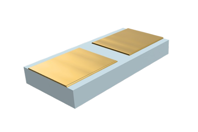
The XG Series low-profile gap capacitor features low insertion loss and ultra high self resonance frequencies for applications including DC blocking, RF Bypass, impedance matching, filtering, tuning and coupling.
-

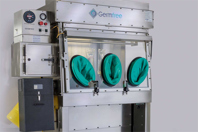
Germfree’s Compounding Aseptic Containment Isolators use HEPA filters to provide the highest level of operator and product protection.
-

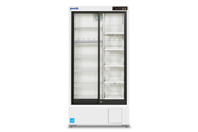
PHCbi brand’s 19.5 cu.ft. (554 L) pharmaceutical refrigerator with adjustable shelving and forced-air circulation help helps ensures uniform temperature control from 2°C to 14°C. The sliding glass door design minimizes air loss and supports easy access in high-use environments. A microprocessor controller and OLED display feature excellent visibility and intuitive operation utilizing control buttons that provide convenient, yet secure, user commands. Refrigeration temperature can be displayed in 0.1°C increments, and the minimum and maximum temperatures within the previous 12 and 24 hours are displayed. Audible and visual alarms with adjustable setpoints warn of deviations from setpoint temperatures, and all alarm conditions are displayed and recorded. A password-protected control interface assures operational security. Natural hydrocarbon refrigerants and inverter compressor technology deliver quiet, energy-efficient performance with fast recovery. ENERGY STAR® Certified.


WHITE PAPERS AND CASE STUDIES
-
 Robust, Scalable Strategy For Monodisperse Nanosuspensions Of Poorly Soluble Drugs
By tailoring the formulation strategy, selecting the appropriate excipients, and fine-tuning process conditions, see how our team was able to improve bioavailability and in vivo exposure.
-
 How Fine Screens Simplify The New Waste Discharge Requirements
How are fine screen solutions aiding winemakers in their efforts to meet California State Water Resources Control Board mandates for enhanced monitoring and treatment of winery process water.
-
 How eSource Reduced Benchmark's Protocol Deviations By Almost 40%
Explore how a leading vaccine site network selected CRIO to help address the challenges with it's use of paper charts in collecting source data.
-
 Life Sciences Corporation Implements eLogbooks Across 15 Sites
New regulations challenged how surgical kits were tracked and processed across 15 U.S. sites. Discover how one team balanced compliance and efficiency to keep life-saving procedures on schedule.
-
 Novel Platform For Execution Of Pragmatic Studies Boosts Cancer Trial Efficiency
Learn how Flatiron partnered with Genentech and Foundation Medicine to develop a novel platform for the execution of pragmatic studies.
-
 Multiple Fill Line Delivery Experience
Learn how a multinational pharmaceutical company successfully implemented a global strategy for insulin cartridge filling, achieving seamless regulatory approval with zero deviations.
-
 AMERICAN SpiralWeld Pipe Delivers For City Of Phoenix Drought Pipeline Project
Phoenix’s Drought Pipeline Project, supported by AMERICAN SpiralWeld Pipe, secures clean water for North Phoenix, delivering up to 75 million gallons daily and earning top industry awards.
-
 Container Closure Integrity Test Method Development For Autoinjectors
Discover an autoinjector technology that leverages laser-based headspace analysis for container closure integrity to advance biologic drug delivery with precision, safety, and regulatory confidence.
-
 Leverage Apps To Reduce Line Changeover Time From 14 Days To 3
A global biopharma leader modernized its complex equipment changeover process using an innovative platform to achieve faster execution, fewer errors, and greater visibility through digitized, validatable SOPs.
-
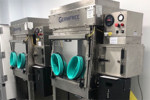
 CAR-T And Laminar Flow Glovebox Isolators
A request was made for a containment system that would protect operators during lentivirus transfer, as well as provide a controlled environment for IL-2 charging of media, bead addition, and blood bag spiking.
-
 At A Small Manufacturing Site") Developing A Project Management Office (PMO) At A Small Manufacturing Site
Developing A Project Management Office (PMO) At A Small Manufacturing SiteDiscover how implementing a Project Management Office transformed a small manufacturing site into a high-performing, strategic asset within a global network.
-
 AEC PFAS Removal System Reduces PFAS Contamination In New Jersey
This case study demonstrates the effectiveness of a new technology for removing PFAS from well water to below the EPA’s detection limits.











NEWS
-
Dielectric Partners With Foccus Digital For Brazilian Broadcast Growth8/15/2025
Dielectric’s Brazilian presence is about to radiate stronger through a new partnership with Foccus Digital that expand Dielectric’s broadcast business throughout the country.
-
Motivosity Launches Lifestyle Spending Accounts To Help Companies Offer Flexible, Hassle-Free Employee Perks5/27/2025
Motivosity, the leading people-first employee recognition and rewards platform built for today’s workforce, is proud to announce the launch of its new Lifestyle Spending Accounts (LSAs) program.
-
GD Energy Products' Y-Shaped Drilling Module Now Rated For 10,000 PSI8/18/2025
GD Energy Products (GDEP), the leading total solutions provider for the frac, drilling and well servicing pumps market, has announced its patented Y-Shaped Drilling Module is now rated for operating pressures up to 10,000 psi.
-
Aircraft Toilets Could Flush Out Spread Of Global Superbugs8/18/2025
Wastewater from aircraft toilets could provide a critical warning system for the global spread of antimicrobial resistant (AMR) superbugs, a silent pandemic that threatens to kill more people than cancer by 2050.
-
Redex Preloaded Systems Deliver Precise Positioning For Machine Tools1/16/2025
Redex is pleased to announce its patented DualDRIVE and TwinDRIVE preloading technologies now give CNC machine designers several ways to build a zero backlash system.
ABOUT
Metal contamination
Food is a nutrient necessary for human's life. In the world we live today, stories about food quality are very relevant. Chemical pollution of food is caused by chemicals which are used in agricultural and industrial production of food. It may be artificially produced or generated while processing, but on the other side metals may also be found in our environment. Heavy metals that food usually contains are: Lead (Pb), Mercury (Hg), Cadmium (Cd) and Arsenic (As).
Lead is mostly stored in the bones and also in the liver. Lead poisoning affects the function of the brain and nervous system, reduces the intelligence, powers of observation and memorizing. Mercury (Hg)is a heavy metal that occurs most frequently in food use pesticides. Mercury is toxic and an elementary and all its connections.
Symptoms of poisoning occur in the digestive organs, and then in the nervous system. Cadmium (Cd ) in food comes from natural sources. High doses of cadmium in the kidneys causing kidney damage tissue, affects the formation of kidney stones and increased pressure.
Cadmium affects the bone structure leading to their deformation. Arsenic accumulates in the body, especially in the hair, skin and some internal organs. Arsenic poisoning cause hair loss, dermatitis and other problems of the digestive system, then fatigue, headache, confusion, psychological problems.
Which food has a metal and so is avoided? Do not use canned food because cans release these silent killers. Alumina affects the central nervous system and kidneys, and is deposited in the bones; it has everything from toothpaste and deodorant, to filter packets for tea, sugar.
Avoid cooking in aluminum cookware. Also, saltwater fish such as mackerel or tuna has high mercury content. So, keep in mind that most metals harm human body and the proper selection of food is necessary for a healthy life.