
Cleaning
PRODUCTS
-
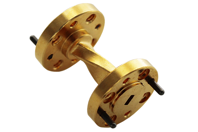
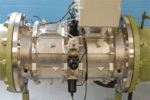
 Waveguide Twist: WT90-1500WG")
Marki Microwave waveguide twists provide accurate offsets and directional changes for waveguide transmission lines and are built with high precision and then gold plated for high corrosion resistance.
-

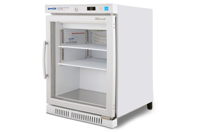
PHCbi brand's 3.0 cu.ft. (85 L) undercounter refrigerator is designed to be incorporated into ADA compliant workspaces and fits under most tables, cabinets, and benches. Its convenient glass door provides visibility into the interior of the unit to avoid unnecessary door openings. Temperature performance for your critical storage items in your tight spaces. Units can be stacked with an adapter to maximize valuable laboratory floor space. This space-saving lab refrigerator includes an automatic defrost function and is ENERGY STAR® certified.
-
 System: Leverage Flexibility And Speed")
Neither traditional nor hybrid clinical trials can operate on rigid EDC systems.
They require flexible data collection systems that support protocol amendments without downtime and accept mobile data without hassle. As a cloud-native solution, TrialKit bends to accommodate mid-study changes. And as the first full-featured EDC platform available as a native mobile app, TrialKit flexes to meet the demands of traditional, hybrid/decentralized, and completely remote clinical trials.
Give your team the freedom to build, deploy, and manage their studies, their way—weeks faster than with rigid EDCs and for a fraction of the cost of the major players.
-
 For Annex 1 Compliance")
The Isolator Glove Testing System enables for Annex 1 compliant wireless and tubeless leak testing of gloves installed in Isolators or RABS. The GTS with the latest software technology offers an extremely flexible and fully integrable solution for glove testing as part of glove management.
-

Free your safety and clinical teams to focus on what matters most.



WHITE PAPERS AND CASE STUDIES
-
 Expanding Accessibility In A Phase 3 Influenza Study Through Community-Based Research
By meeting participants where they are, this study sets a new benchmark for inclusive, efficient, and impactful vaccine development.
-
 Navigate The Complexities Of CGTs With Regulatory And CMC Expertise
Explore how strategic regulatory and CMC expertise helped guide a biopharmaceutical company’s regulatory and development strategy for a cell and gene therapy product.
-
 RO Membrane Protection For A Desalination Plant In Mejillones, Chile
Read about a seawater desalination plant that presented with several performance issues and chose the HOD UV system to control biofouling on the RO membranes.
-
 Manufacturing Transfers: Delivering 140+ Precision Medical Devices Without Missing A Deadline
Go inside a successful manufacturing transfer of over 140 Class-III silicone medical devices and on-time delivery for a top-30 OEM through expert project management and rigorous validation processes.
-
 5 Must-Haves For Electronic Batch Records In Life Sciences
Companies still relying on paper-based manufacturing are falling behind. Examine how digital transformation boosts efficiency and reduces errors in this essential shift toward smarter operations.
-
 Outgrowing Excel: Implementing RTSM In A Live Phase I Trial
Learn how a clinical-stage oncology biotech successfully transitioned a live Phase I trial from manual spreadsheets to RTSM without disrupting site momentum or patient enrollment.
-
 Drinking Water Disinfection At Lunenberg, Massachusetts, USA Local Community
In this case study, read how the Lunenburg Water District improved their water disinfection system with the installation of an Atlantium RZ300-11 HOD UV system. The system effectively disinfects water, meets future demands, and eliminates chlorine taste and odor.
-
 Strategic Pre-IND Consulting For Gene Therapy In Rare Leukemia
Learn about the collaborative efforts of an innovative biotech startup and Ergomed Consulting to overcome challenges in the pre-IND phase for a novel gene therapy targeting a rare form of leukemia.
-
 Novel Platform For Execution Of Pragmatic Studies Boosts Cancer Trial Efficiency
Learn how Flatiron partnered with Genentech and Foundation Medicine to develop a novel platform for the execution of pragmatic studies.
-
 Metropolitan Sewer District Of Greater Cincinnati
The Lower Mill Creek Partial Remedy (LMCPR) in Hamilton County, Ohio, is a large, complex effort to remove about 1.78 billion gallons of combined sewer overflows (CSOs) annually from the Mill Creek, an Ohio River tributary. When complete, LMCPR will improve water quality and serve as a catalyst to improve local neighborhoods.
-
 The City Of Fayetteville's Flood Resiliency In The Face Of Climate Change: Mapping 15 Watersheds
The city of Fayetteville, North Carolina has always had flooding issues, but it’s been getting worse as weather patterns have been changing. They were hit four years in a row by storms Matthew (2016), Irma (2017), Florence (2018), and Dorian (2019).
-
 Partnering For Precision In An IPF Study: Securing Timely Deliverables And Key Endpoints
A pharmaceutical company enlisted Worldwide Clinical Trials to help achieve on-time results for their Phase IIa IPF clinical trial, enabling them to manage vendors and meet challenging deadlines.









NEWS
-
How Lakes Connect To Groundwater Critical For Resilience To Climate Change7/9/2025
The study drew on data from 350 lakes across 18 European countries, collected between 2022 and 2024, to provide a comprehensive picture of how the continent’s lakes are coping with climate change.
-
3-In-1 Orbital Thread Milling Cutters For New Thread Sizes1/14/2025
Following the successful introduction of the Thrill·tec TC645 Supreme orbital drill/thread mills for dimensions from M4 to M12 in 2023, Walter is now expanding its range to cover additional metric dimensions from M14 to M20 as well as their imperial equivalents.
-
NX Filtration And Eau d'Azur Partner For Advanced Micropollutant Treatment In Nice8/25/2025
NX Filtration, a global leader in advanced hollow fiber membrane technology, is proud to announce its collaboration with Eau d’Azur, the public company responsible for drinking water and wastewater services for the Nice Côte d'Azur Metropole.
-
Aircraft Toilets Could Flush Out Spread Of Global Superbugs8/18/2025
Wastewater from aircraft toilets could provide a critical warning system for the global spread of antimicrobial resistant (AMR) superbugs, a silent pandemic that threatens to kill more people than cancer by 2050.
-
Motivosity Launches Lifestyle Spending Accounts To Help Companies Offer Flexible, Hassle-Free Employee Perks5/27/2025
Motivosity, the leading people-first employee recognition and rewards platform built for today’s workforce, is proud to announce the launch of its new Lifestyle Spending Accounts (LSAs) program.
ABOUT
Cleaning
Food processing is an equipment heavy manufacturing process. Many different types of equipment are used to produce and package foods. An effective and reliable cleaning regime is critical for food safety, equipment maintenance, and equipment functionality.
Effective equipment cleaning reduces the chances of food contamination during each stage of food production including preparation, processing, storage and service or delivery.
Cleaning work surfaces and equipment surfaces includes removing soil and any accumulation of food residues that can decompose or support the growth of disease, the production of toxins or nuisance microorganisms.
Water is the basic element of all food processing plant cleaners. All water used must be free from disease producing organisms, toxic metal ions, and bad odors or tastes. Cleaning compounds must be tailored to the water supply at the site where the cleaning takes place.
Sanitization and disinfecting are important components of a proper cleaning regime. Sanitization is the application of any effective method or substance to reduce the number count of bacterial pathogens to a safe and acceptable level. The sanitization process must be safe for the equipment, the product and the consumer.
Disinfecting is the process of killing off microorganisms to control disease, and to prevent food spoilage.
The cleaning regime depends on the type of food processing being done. It may be necessary to clean after each daily production run or more often. The type of cleaning must also be specified in a food manufacturing facility. All cleaned and sanitized equipment and surfaces should drain dry and be stored dry to prevent bacterial growth.
Food manufacturing cleaning processes must be consistently monitored and documented to be in regulatory compliance.